
Tension in your neck often goes hand in hand with a tight upper back, and stretching one without addressing the other can feel like an uphill battle. Knowing how to stretch your upper back when your neck also feels tight can help relieve discomfort, improve posture, and make daily movements easier. A few simple stretches, performed correctly, can relieve pressure in both areas simultaneously, making your body feel lighter and more flexible.
In this guide, we’ll show effective stretches that target the upper back and neck together, explain the proper technique, and give tips to make them part of your daily routine so you can feel relief and prevent stiffness from building up.
1. Seated Upper Back Stretch (Chair Stretch for Office Relief)

This one is great if you sit a lot. You can do it right at your desk. No mat. No equipment. It helps loosen the upper back and reduces pressure on your neck, which is why many people include it in their regular stretches for upper back pain.
How to Do It Step by Step
- Step 1: Set your posture: Sit near the edge of your chair with both feet flat on the floor about hip-width apart, then sit tall and lengthen your spine before you begin.
- Step 2: Position your arms: Reach both arms straight out in front of you, clasp your hands together or hold opposite shoulders, and keep your elbows slightly bent and relaxed.
- Step 3: Round your upper back: Slowly push your hands forward and gently round your upper back into a soft C shape, focus on spreading your shoulder blades apart, and let your chin drop slightly without pressing your head down.
- Step 4: Breathe and relax: Take a slow breath through your nose, then exhale slowly, letting your upper back soften, keeping each breath steady and calm.
What You Should Feel: You should feel a gentle stretch between your shoulder blades and mild lengthening along the back of your shoulders. There should also be a light release at the base of your neck, with no sharp pain, tingling, or pressure.
Duration and Frequency: Hold for 15 to 30 seconds, repeating 2 to 3 times, once or twice daily, depending on stiffness.
2. Cat-Cow Stretch (Spinal Mobility for Neck and Upper Back)
This stretch is great if your back feels stiff and your neck feels tight at the same time. It gently moves your spine instead of forcing one area to stretch. No equipment needed. Just a little floor space. One of the benefits of stretching with Cat-Cow is that it improves spinal mobility, reduces tension between the shoulders and neck, and encourages better posture over time. It helps relieve upper back pain and reduces the strain that often radiates into your neck.
How to Do It Step by Step
- Step 1: Get into position: Start on your hands and knees, with your hands under your shoulders, your knees under your hips, and your back flat, keeping your head in a neutral position.
- Step 2: Move into Cow: Slowly drop your belly toward the floor, lift your chest slightly forward, let your shoulder blades come a little closer together, gently raise your chin without forcing your neck, and take a slow breath in.
- Step 3: Move into Cat: As you exhale, press your hands into the floor, round your upper back toward the ceiling, spread your shoulder blades apart, and let your chin gently tuck toward your chest.
- Step 4: Keep it slow and steady: Move smoothly between the two positions, let your breathing guide the motion, and pay attention to how your upper back feels as you move.
What You Should Feel: Smooth, gentle movement through your upper and middle back, with a stretch between your shoulder blades when you round your back. Your neck should feel lighter and less strained as your spine moves naturally.
Duration and Frequency: Move back and forth for 30 to 60 seconds, performing 8 to 10 repetitions once or twice a day.
3. Thread the Needle Stretch (Deep Upper Back Opener)
This stretch targets the tight spots between your shoulder blades. It feels deeper than Cat-Cow but still gentle on your neck. You only need a mat or soft surface. It helps release upper back tension that often creeps up into the neck.
How to Do It Step by Step
- Step 1: Start on hands and knees: Place your hands under your shoulders, keep your knees under your hips, and maintain a neutral back position.
- Step 2: Thread your arm through: Slide your right arm under your chest toward the left side, turn your palm up as you reach, and lower your right shoulder toward the floor.
- Step 3: Rest and breathe: Let the side of your head rest lightly on the floor if it feels comfortable, keep your hips level, and take slow breaths as you relax into the stretch.
- Step 4: Switch sides: Slowly return to the starting position and repeat the stretch on the other side.
What You Should Feel: You should feel a stretch across the back of your shoulder and gentle pulling between your shoulder blades. The base of your neck should feel lighter, and tension should ease without any sharp pain. Avoid common stretching mistakes, such as twisting too far or forcing your arm.
Duration and Frequency: Hold for 20 to 30 seconds on each side, repeating 2 to 3 times, once daily or after prolonged sitting.
4. Child’s Pose with Side Stretch (Upper Back and Lat Release)
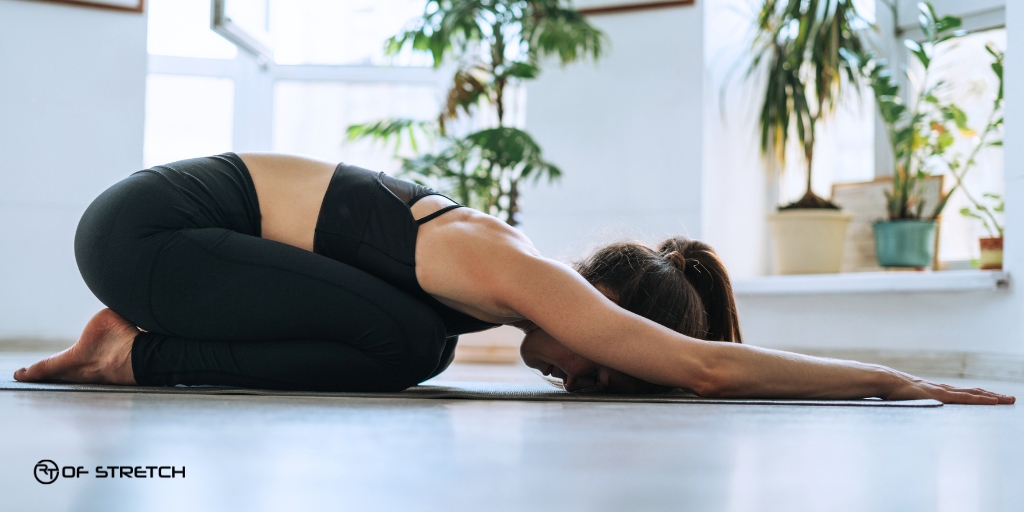
This stretch relaxes your whole upper body. It opens the upper back and the sides of your torso. Tight side muscles can pull on your shoulders and neck, so loosening them can bring real relief.
How to Do It Step by Step
- Step 1: Get into Child’s Pose: Kneel on the floor, sit your hips back toward your heels, and reach your arms forward as you lower your chest toward the floor.
- Step 2: Add the side stretch: Walk both hands to the right until you feel a stretch along the left side of your upper back, and keep your hips back.
- Step 3: Breathe and relax: Take slow breaths and let your shoulders soften as you relax into the stretch.
- Step 4: Switch sides: Walk your hands to the left to stretch the opposite side.
What You Should Feel: You should feel a stretch along the sides of your upper back and a gentle opening near your shoulder blades. Your neck should feel less tight while your lower back remains relaxed and strain-free.
Duration and Frequency: Hold each side for 20 to 30 seconds, repeating 2 times per side, ideally at the end of the day.
5. Chin Tucks (Fix “Tech Neck” While Stretching Upper Back)
This move looks simple, but it helps a lot. If your head sticks forward while sitting, your neck and upper back work overtime. Chin tucks help bring your head back in line and reduce that constant strain.
How to Do It Step by Step
- Step 1: Sit or stand tall: Keep your shoulders relaxed and look straight ahead.
- Step 2: Gently pull your chin back: Slide your chin straight back as if making a double chin, and keep your head level without tilting it up or down.
- Step 3: Hold and release: Hold for a few seconds, then relax and return to a neutral position.
What You Should Feel: You should feel mild tension at the base of your skull, light engagement in the front of your neck, and better alignment through your upper back, without any pain.
Duration and Frequency: Hold each tuck for 5 seconds. Repeat 8 to 10 times. Do this a few times a day, especially if you use a computer often.
6. Doorway Chest Stretch (Because a tight chest means a tight neck)
If your chest muscles are tight, they pull your shoulders forward. That puts stress on your upper back and neck. Opening the chest helps your shoulders sit in a better position and reduces neck strain.
How to Do It Step by Step
- Step 1: Stand in a doorway: Place your forearms on each side of the door frame and keep your elbows about shoulder height.
- Step 2: Step forward gently: Take a small step through the doorway, feel the stretch across your chest and front shoulders, and keep your neck relaxed.
- Step 3: Stay steady: Do not lean your head forward, and keep your core lightly engaged.
What You Should Feel: You should feel a stretch across your chest, an opening in the front of your shoulders, and less pulling in your upper back and neck, while avoiding arching your lower back.
Duration and Frequency: Hold for 20 to 30 seconds. Repeat 2 to 3 times. Doing this daily can help improve posture and reduce neck tension over time.
Tips for Effective Upper Back and Neck Stretching
To get the most out of your upper back and neck stretches, focus on slow, controlled movements and steady breathing. Pay attention to gentle tension rather than pushing into pain. Assisted stretching can be a helpful option if you find certain areas hard to reach on your own. Even short daily sessions are often more effective than occasional long sessions, helping your muscles and joints adjust gradually over time.
Maintaining good posture while stretching is essential. Keep your shoulders relaxed, spine aligned, and neck neutral to avoid additional strain. By combining these simple habits with your daily stretches, you can improve mobility, release tension, and support better posture in your upper back and neck consistently.
Final Thoughts
When stretching your upper back while your neck is tight, treat them as a single connected area. Your neck does not work alone. If your upper back is stiff, your neck will feel the strain. Over time, you will notice the real benefits of stretching, such as reduced tension, improved posture, and easier movement. Simple stretches such as seated rounding, Cat-Cow, Thread the Needle, chin tucks, and chest openers are most effective when performed consistently. Many people also include them in their daily stretches to relieve back pain. Move slowly. Breathe. Hold each stretch for 15 to 30 seconds. Do not force anything.
Ready to Finally Loosen Your Upper Back and Neck?
If you are struggling to stretch your upper back while your neck feels tight and the tension keeps coming back, you do not have to figure it out alone. Guided assisted stretch sessions can help target both areas safely and effectively, especially when you cannot quite get deep enough relief on your own, and that is exactly what we focus on at RT OF STRETCH.
If you are tired of constant stiffness and nagging tension, contact us today and let us help you release that upper back tightness and give your neck the relief it has been asking for.
FAQs
Why does my neck hurt when my upper back feels tight?
Your upper back and neck work together. If your upper back is stiff, your neck has to work harder to hold your head up. That extra effort often leads to soreness and tightness.
Is it safe to stretch my neck every day?
Yes, gentle stretching is usually safe if you move slowly and avoid pain. Do not force your neck into deep stretches. If you feel sharp pain, stop and get checked by a professional.
How long should I hold each stretch?
Hold each stretch for about 15 to 30 seconds. Breathe slowly and stay relaxed. You can repeat each stretch two or three times.
How often should I stretch my upper back and neck?
If you sit a lot or use a computer daily, try stretching once or twice a day. Even five minutes can help reduce tension over time.
When should I seek professional help for neck and upper back pain?
If the pain does not improve, keeps coming back, or comes with numbness, tingling, or headaches, it is a good idea to see a professional. Guided stretch sessions can also help if you feel stuck and cannot get relief on your own.