
Breathing and Upper Back Stretching simply means coordinating your breath with upper back stretches to relax your muscles and help your spine move more easily. When you inhale, the rib cage expands, creating space in the upper back. When you exhale, the muscles relax, allowing the stretch to go deeper without forcing it.
In this blog, we will explain how breathing and upper back stretching work together and walk you through a simple, step-by-step method.
Why Proper Breathing Improves Upper Back Stretching
Breathing affects how the rib cage, spine, and surrounding muscles move. When breathing stays shallow, the rib cage barely expands. This limits movement in the thoracic spine, which is the middle part of the back. Slow breathing allows the rib cage to expand and encourages the upper back to open. Muscles also relax during longer exhales, which makes stretches feel deeper and more comfortable.
Benefits of combining breathing and upper back stretching include:
- Better thoracic spine mobility
- Reduced muscle tension in the shoulders and back
- Improved posture and spinal support
- Relief from upper back pain and stiffness
Step-by-Step Method for Breathing and Upper Back Stretching
Follow these simple steps to combine controlled breathing with upper-back stretches to help your muscles relax and your spine move more comfortably.
Step #1. Seated Upper Back Stretch With Breathing
This stretch targets the muscles between the shoulder blades and helps relieve tension from sitting, especially when stretching your upper back. Sit tall in a chair and interlace your fingers in front of you. Extend the arms forward and allow the upper back to round slightly.
Follow this breathing pattern:
- Inhale and lengthen the spine
- Exhale and gently reach the arms forward
Hold the stretch for twenty seconds while breathing slowly.
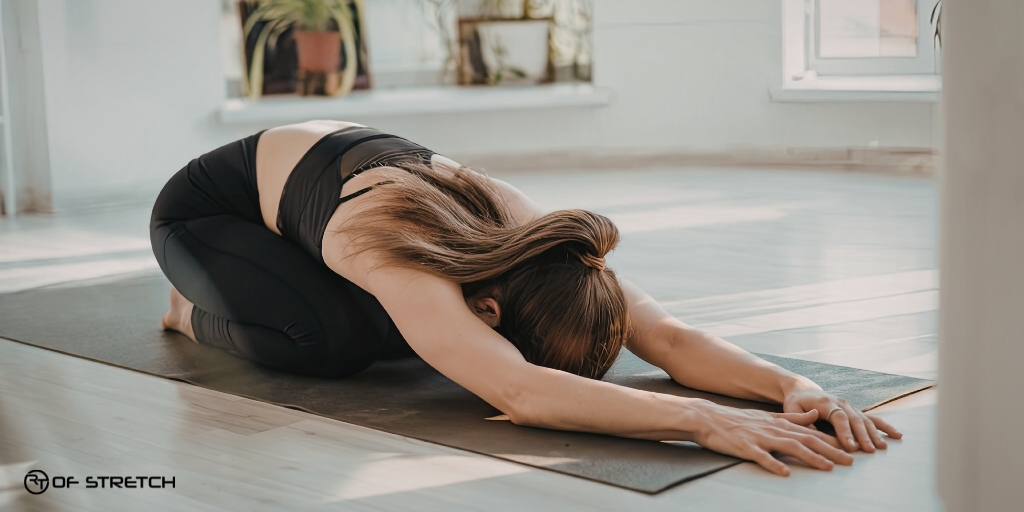
Step #2. Child’s Pose With Deep Breathing
Child’s pose is a gentle stretch that opens the upper back while allowing the ribs to expand with breathing.
Start by kneeling on the floor. Sit your hips back toward your heels and extend your arms forward on the ground. Allow the chest to lower toward the floor.
Use this breathing rhythm during the stretch:
- Inhale deeply and expand the rib cage
- Exhale slowly and allow the chest to sink lower
Stay in the stretch for thirty seconds.
Step #3. Thread-the-Needle Upper Back Stretch
This stretch adds gentle rotation to the thoracic spine, which helps restore mobility in the upper back.
Begin on hands and knees. Slide one arm under the body and across the floor while lowering the shoulder toward the ground.
Use controlled breathing as you stretch:
- Inhale to prepare
- Exhale and rotate slightly deeper
Hold the position for twenty seconds before switching sides.
Step #4. Wall Stretch With Rib Expansion
This stretch opens the chest and lengthens the upper back while allowing the rib cage to expand.
Stand facing a wall and place both hands on it at shoulder height. Step your feet back and hinge slightly at the hips so your chest drops toward the floor.
Coordinate the stretch with breathing:
- Inhale and expand the ribs
- Exhale and relax the shoulders
Hold the stretch for about twenty seconds.
The Breathing Technique That Helps Most
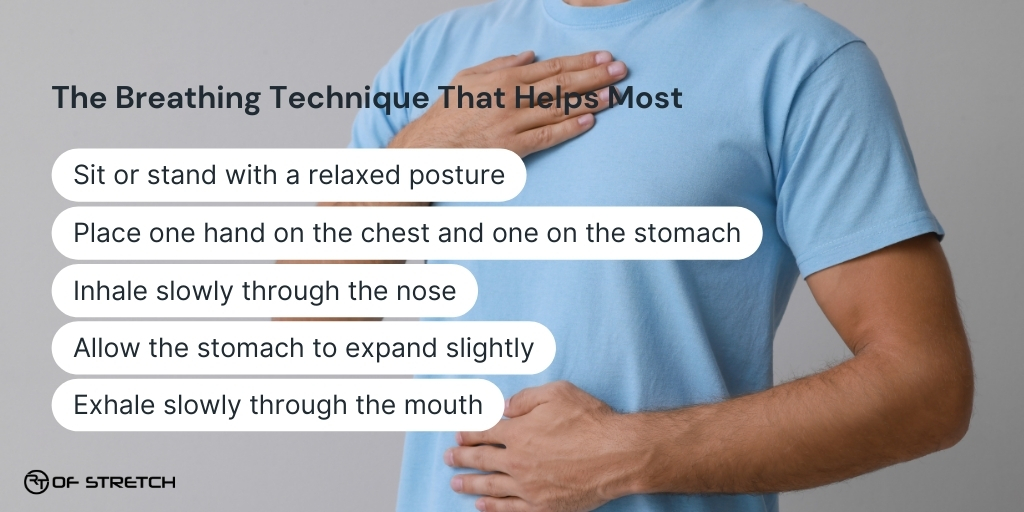
The best breathing method for stretching is diaphragmatic breathing, which is commonly used in different stretching techniques and methods. Many people call it belly breathing because the stomach expands during the inhale.
Steps to practice this breathing method:
- Sit or stand with a relaxed posture
- Place one hand on the chest and one on the stomach
- Inhale slowly through the nose
- Allow the stomach to expand slightly
- Exhale slowly through the mouth
A helpful rhythm is:
- Inhale for four seconds
- Exhale for six seconds
The longer exhale encourages muscle relaxation and helps stretches feel smoother.
The Simple Rule for Breathing While Stretching
Many people wonder when to breathe during a stretch. A simple pattern keeps the movement natural. Use this rule during breathing and upper back stretching:
- Inhale to prepare or lengthen the spine
- Exhale to deepen the stretch
The inhale creates space in the rib cage. Exhaling relaxes the muscles, allowing the stretch to deepen without strain. Avoid holding your breath. Slow breathing helps the body relax and move more comfortably.
Simple Five-Minute Breathing and Upper Back Stretching Routine
You do not need a long session to feel the benefits of breathing and upper back stretching. A short daily routine can improve mobility and reduce tension.
Try this five-minute routine:
- One minute of diaphragmatic breathing
- One minute of seated upper back stretch
- One minute of child’s pose breathing stretch
- One minute of thread-the-needle on each side
Regular practice helps, and many people also notice additional benefits of stretching for the body, like improved movement and reduced tension.
Who Benefits From Breathing and Upper Back Stretching
Many people experience upper back tightness during daily life. Combining breathing with stretching helps restore movement and reduce tension, and some people also benefit from assisted stretching sessions when certain muscles are difficult to stretch on their own.
People who benefit the most include:
- Desk workers
- Athletes
- Personal trainers, chiropractors, and body workers
- Massage therapists and movement specialists
- Older adults
Final Thoughts
Upper back tightness often builds slowly through posture, stress, and daily habits. Stretching alone can help, but adding breathing makes the movement more effective. When breathing and Upper Back Stretching work together, the rib cage expands, muscles relax, and the spine moves more freely. This simple combination of breathing and upper back stretching supports better posture, healthier movement, and a more comfortable back.
Breathe Better and Release Upper Back Tension
If upper back tightness keeps returning, more than a quick stretch may be needed. Guided assisted stretch sessions target hard-to-reach muscles around the shoulders, rib cage, and thoracic spine. At RT OF STRETCH, trained instructors focus on using the Neuro-Muscular Connectivity Stretch method with hands-on guidance and proper breathing.
If stiffness persists, contact us to learn more about our professional assisted stretch therapy sessions, group stretch classes, and services designed to improve mobility and reduce daily tension.
FAQs
Why is breathing important during upper back stretching?
Breathing helps the rib cage expand and relaxes the muscles around the upper back. Slow, controlled breathing makes stretches more effective and helps the spine move more comfortably.
How often should I practice breathing exercises and upper-back stretching?
Most people benefit from doing these stretches once a day. Even a short five-minute routine can help reduce stiffness, improve posture, and maintain upper back mobility.
Can breathing and upper back stretching help with desk-related back pain?
Yes. Long hours of sitting often cause tightness in the upper back and shoulders. Combining breathing with stretching helps release tension, improve circulation, and restore movement in the thoracic spine.
What is the best breathing technique for upper back stretching?
Diaphragmatic breathing, also called belly breathing, is the most effective. Inhale slowly through the nose so the stomach expands, then exhale slowly through the mouth. This helps relax the muscles and allows the stretch to deepen safely.
What if I cannot get a deep stretch in my upper back?
Some upper back muscles are difficult to stretch on their own. In those cases, assisted stretch sessions with a trained instructor can help guide your body through deeper, controlled stretches while you focus on breathing and relaxing.