
Early-stage sciatica often starts as a mild ache or tightness that travels from the lower back through the hips and down the leg. Many people notice it after sitting for long periods, lifting incorrectly, or experiencing muscle tightness around the hips and lower back. Because the sciatic nerve runs from the lower spine through the buttocks and down each leg, irritation along this pathway can cause discomfort in multiple areas.
Learning how to stretch safely during the early stages of sciatica can help reduce pressure on the nerve, improve mobility, and prevent symptoms from worsening. Gentle movement is often more helpful than complete rest because stretching keeps muscles flexible and reduces tension around the nerve.
Below are five simple sciatic nerve stretches that target the muscles most likely to contribute to sciatic nerve irritation.
What Is Early-Stage Sciatica?
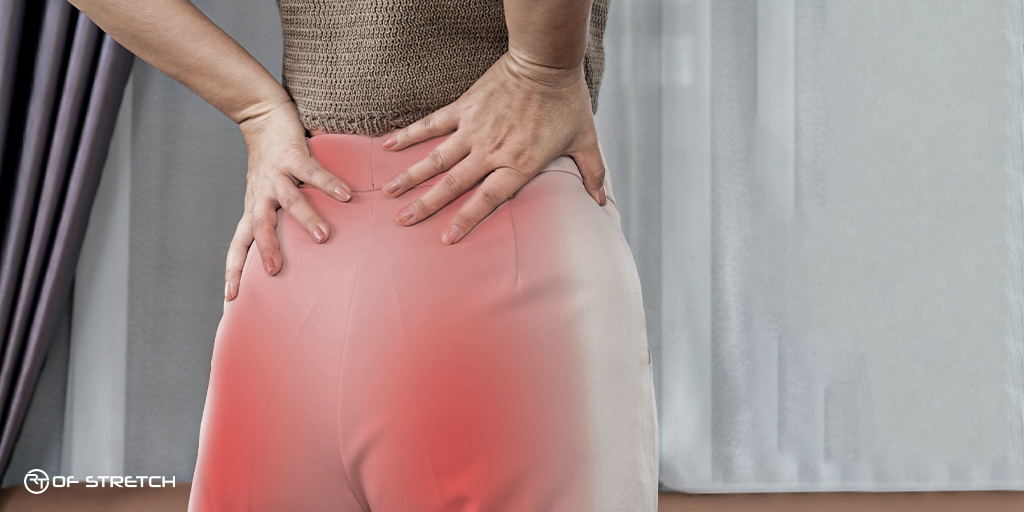
Sciatica isn’t a condition by itself—it’s a symptom. It usually means a nerve root is getting irritated or pinched somewhere along the sciatic nerve’s path, which runs from your lower back all the way down both legs. Common causes include herniated discs, tight glutes, or even inflammation from sitting too long.
If your pain is manageable and has lasted less than a few weeks, you might be in the early stage. This is when gentle movement matters most.
Why Stretching Works
When done right, assisted stretches for sciatic nerve pain help loosen tight muscles (like the piriformis or hamstrings), improve mobility, and relieve pressure on the irritated nerve. Stretching also helps your body relearn better movement patterns, so pain is less likely to stick around.
But remember—sciatica nerve stretches shouldn’t make your pain worse. If they do, stop and consult a healthcare professional.
Top 5 Sciatic Nerve Stretches
1. Lumbar Rotation (a.k.a. Tick-Tocks)
It is a gentle mobility exercise for your lower back.
How to do it:
-
- Lay on your back. Bend your knees. Keep your feet on the floor.
-
- Let both knees slowly fall to one side while keeping your shoulders grounded.
-
- Bring the knees back to the center and go to the other side.
You should feel a light rotation through your spine—not pain. Try doing 20 reps once a day.
2. Glute & Piriformis Stretch

Tight glutes or an angry piriformis muscle press on your sciatic nerve.
How to do it:
-
- Lay on your back. Bend both knees.
-
- Cross your right ankle over your left thigh.
-
- Hold the back of your left thigh and slowly pull it toward your chest.
You’ll feel a stretch deep in your buttock. Hold the stretch for 15 seconds. Repeat it 3 times on each side.
3. Knee-to-Opposite-Shoulder Stretch
It is a go-to stretch for easing pressure on the sciatic nerve.
How to do it:
-
- Lie on your back with your legs extended.
-
- Bend your right knee and gently pull it across your body toward your left shoulder.
-
- Stop when you feel a comfortable stretch—no pain.
It should feel like a good stretch, not a sharp pain. Hold for 30 seconds and repeat three times on each side.
4. Hamstring Stretch with a Towel
Tight hamstrings pull on your lower back and bother the nerve. This stretch helps with both flexibility and nerve tension.
How to do it:
-
- Lay on your back. Put a towel or strap under one foot.
-
- Keep your leg straight. Slowly raise it toward the ceiling.
-
- Hold for 30 seconds. Switch legs and repeat.
Keep the stretch gentle. It shouldn’t feel like you’re forcing the leg up—go slow.
5. Seated Glute Stretch
Sitting too long? This seated option can help release built-up tension around the sciatic nerve path.
How to do it:
-
- Sit on a strong chair. Keep your feet flat on the floor.
-
- Put your right ankle on top of your left knee.
-
- Keeping your back straight, gently lean forward.
-
- Hold for 30 seconds, then switch legs.
This stretch is excellent if you’re working at a desk all day.
Tips for Stretching Safely with Sciatica
If you are dealing with early-stage sciatica, stretching should always be gentle and controlled.
Keep these tips in mind:
-
Move slowly and avoid sudden movements
-
Stop if you feel sharp or shooting pain
-
Focus on breathing and relaxing into each stretch
-
Stretch consistently rather than aggressively
Stretching the hips, glutes, and hamstrings can help reduce tension around the sciatic nerve and improve flexibility over time.
Final Thoughts
Early-stage sciatica can feel frustrating, but you don’t have to wait for it to get worse. These sciatic nerve stretches are simple, practical, and designed to relieve tension without adding more stress. They help calm the nerves, support your mobility, and get you back to doing what you love—without pain dragging you down.
Start with a few reps each day and listen to your body. If you keep at it, you’ll likely start feeling better within a few weeks.
Ready to Relieve Sciatica Tension Safely?
If early-stage sciatica is making daily movement uncomfortable, guided stretching can make a big difference. At RT OF STRETCH, our assisted stretch sessions focus on loosening tight hips, glutes, and lower back muscles that often contribute to sciatic nerve irritation.
Instead of struggling with stretches on your own, our trained stretch specialists help target the areas that need it most so you can move more comfortably and safely. Contact us today to schedule a session and start relieving sciatic tension with professional assisted stretching.
FAQs
How often should I do sciatic nerve stretches?
If you’re starting, try 1–2 times per day. Focus on gentle movement and see how your body responds.
Can I do these stretches even if I’m in pain?
Yes—but only if the pain doesn’t increase during or after. The goal is to feel relief, not aggravation.
How long before I see results?
Some people feel better after a few sessions. Others take a few weeks. Consistency really matters here.
What if the stretch feels too intense?
Ease off. You don’t need to go to your limit. A lighter version of the stretch can still benefit you.
Are these stretches safe during a flare-up?
Most of the time, yes. But if your pain suddenly gets worse, or you have numbness or weakness, stop and see your doctor.