
Football is a physically demanding sport that requires speed, agility, strength, and explosive movement. From sudden sprints to sharp turns and powerful kicks, players constantly place stress on their muscles and joints. Without proper preparation, this intense activity can increase the risk of strains, tightness, and injuries.
That’s why football stretches play such an important role in a player’s training routine. Stretching helps improve flexibility, prepare muscles for movement, and support better performance on the field. Many coaches include stretching as part of warm-ups and recovery routines because flexible muscles move more efficiently during high-intensity actions.
In this guide, we’ll explain the importance of football stretches, the key muscle groups players should focus on, and the types of stretches that help improve mobility, performance, and injury prevention during training and games.
Why Football Players Need Stretching
Stretching goes beyond simply reaching for your toes or warming up before a match. For football players, it’s a vital practice that helps prevent injuries and improves overall performance.
The intense physical demands of football require your muscles and joints to be flexible and ready for quick, explosive movements. Without proper stretching, your risk of injury increases significantly, and your ability to perform at your best can be compromised.
Types of Football Stretches
Understanding the types of stretches and when to use them is critical to maximizing their benefits. Football players should focus on dynamic and static stretching to prepare their bodies for the sport’s rigors and recover afterward.
Dynamic Stretching (Before Training or Games)

Dynamic stretching involves engaging parts of your body through a range of motion, gradually increasing reach and speed. This type of stretching is ideal before a game or training session. It warms up your muscles and conditions them for the intense physical activity ahead.
- Walking Knee Hugs: This stretch improves hip mobility and increases flexibility in the glutes and hamstrings, which is crucial for quick sprints and agility on the field.
- Dynamic Lunge with Rotation: This stretch is perfect for increasing hip mobility and thoracic spine flexibility, enhancing a player’s sprint speed and agility.
- Frankenstein Walk: This exercise allows players to prevent strains during high-speed movements like running and kicking by stretching the hamstrings.
Static Stretching (After Training or Games)
Static stretching involves maintaining a stretch for a set period, usually 20 to 45 seconds. This type of stretching is best for cooling down after a game or training session. It helps reduce muscle stiffness and improve flexibility over time.
- Hamstring Stretch: Essential for runners, this stretch helps prevent injuries by maintaining the flexibility of the hamstrings.
- Posterior Capsule Stretch: This stretch keeps the shoulder muscles flexible, which benefits players who throw, like quarterbacks.
The Benefits of Regular Football Stretching
Including a regular stretching routine in your training program offers benefits beyond immediate physical effects.
1. Enhanced Recovery
Stretching after a game or workout helps quicker recovery by boosting blood circulation and decreasing muscle tension. This means you can return to the field faster, with less risk of injury or soreness.
2. Prolonged Athletic Longevity
Regular stretching helps prevent injuries and keeps your muscles and joints healthy. This can prolong your football career, allowing you to play at a high level for many years.
3. Mental Focus and Relaxation
Stretching can also have psychological benefits. The stretching routine can be a mental reset, helping you focus and relax before a game or unwind after a tough session. This mental clarity can translate into better performance on the field.
Suggested Stretching Routine for Football Players
Football players’ well-rounded stretching routine should include dynamic stretches before a game or training and static stretches afterward. This combination ensures your muscles are prepared for action and correctly cooled down to prevent stiffness and soreness.
Pre-Game/Training Routine:
- Incorporate dynamic stretches like walking knee hugs, dynamic lunges with rotation, and Frankenstein walks.
Post-Game/Training Routine:
- Use static stretches like the hamstring and posterior capsule stretch to cool down and maintain muscle flexibility.
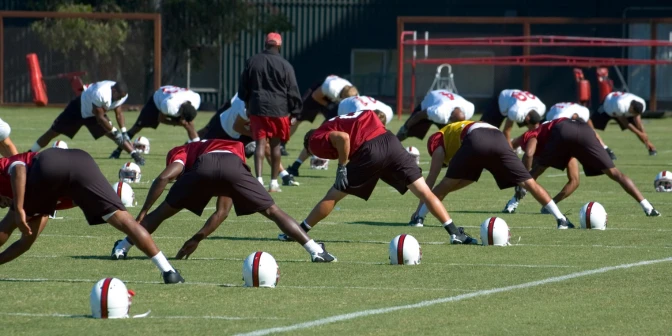
Improve Your Football Mobility and Prevent Tightness
If tight muscles, limited flexibility, or recurring stiffness are affecting your performance on the field, guided stretching can help. At RT OF STRETCH, our assisted stretch sessions focus on improving mobility, flexibility, and muscle recovery so athletes can move more freely and perform at their best.
Instead of guessing which stretches your body needs, our trained stretch specialists help target key muscle groups used in football. Contact us today to schedule a session and experience how assisted stretching can support your performance and recovery.
FAQs
How often should football players stretch?
Football players should stretch before and after every training session and game. Pre-game stretching helps warm up the muscles, while post-game stretching aids in recovery and flexibility. A routine will ensure long-term benefits.
Can stretching improve my football skills?
Yes, stretching can improve your football skills by increasing your flexibility and range of motion. These are crucial for movements like kicking, sprinting, and changing direction. Stretching also helps prevent injuries, allowing you to train consistently.
Is there a difference between stretching for football and other sports?
While stretching principles are similar across sports, football-specific stretches focus more on the hips, hamstrings, and shoulders due to the game’s unique movements and physical demands. It’s essential to tailor your stretching routine to football’s specific needs.