
Recovery after surgery isn’t just about rest, it’s about movement, too. While your body needs time to heal, staying completely still can actually slow things down. That’s where gentle stretching comes in. It’s often overlooked, but it can quietly make a big difference in how you bounce back.
A patient guide from the Anesthesia Patient Safety Foundation (APSF) explains that incorporating stretching into post-operative care can help improve blood flow and promote faster healing. This type of targeted movement may also prevent scar tissue from forming and promote speedier tissue regeneration.
In this blog, we’ll explore how stretching after surgery can speed up healing, support circulation, reduce stiffness, and help you feel stronger, sooner.
Why Movement Matters in Recovery
Right after surgery, your body needs rest. But too much rest can lead to tight muscles, reduced blood flow, and longer recovery times. Stretching helps break that pattern. It keeps your body moving gently and reminds your muscles and joints what it feels like to work again.
Even simple range-of-motion exercises can support healing. Moving your body improves how oxygen and nutrients reach the areas that need it most. And that speeds things up. In fact, doing regular stretching and range of motion exercises can reduce pain by 20–30% during the first month after surgery.
Here’s How Stretching Supports Recovery After Surgery
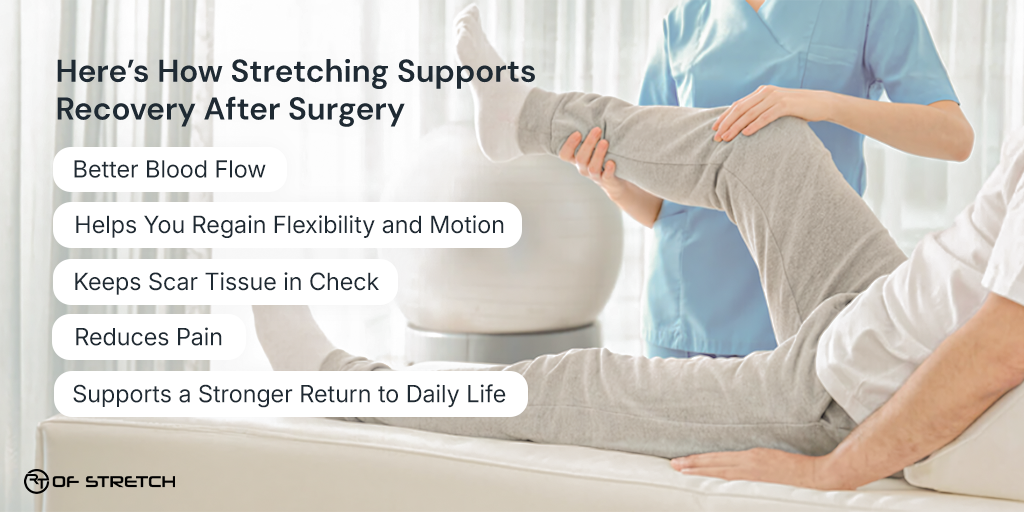
1. Better Blood Flow
Stretching gets the blood flowing to areas that may feel stiff or sore. That fresh blood carries oxygen and nutrients right to your healing tissues. It also helps flush away waste products, which helps bring down swelling.
For example, after knee or hip surgery, light leg stretches promote healing while reducing inflammation. This can ease pressure and help your muscles feel less heavy and sore.
2. Helps You Regain Flexibility and Motion
After any surgery, your body might feel tighter than usual. You might notice you’re not able to move like you did before. Stretching gently lengthens your muscles and tendons again, helping your body get back its natural range of motion.
This is key for daily comfort, even something as simple as putting on socks or walking around the house.
3. Keeps Scar Tissue in Check
Surgery can leave behind scar tissue. That’s totally normal. However, too much of it, especially around joints, can make movement more difficult. Post-surgery stretches help prevent the thick, sticky tissue from building up in ways that restrict your movement.
Gentle movement can break down that early scar tissue before it becomes an issue.
4. Reduces Pain
One of the benefits of daily stretching is pain relief. Stretching can ease muscle tension, which often builds up after surgery due to stress, stiffness, or lack of movement. Moving your body helps you relax, and relaxing helps reduce pain.
The more you move, the more confident you feel in your recovery.
5. Supports a Stronger Return to Daily Life
Stretching helps get you back to your routines. Whether it’s getting dressed without help or walking up stairs, these small movements matter.
With regular stretching, plus whatever physical therapy your doctor recommends, you’re helping your body relearn what it feels like to move well.
Simple Stretches for Healing Support
The best stretches for recovery are gentle, consistent, and guided by your healthcare provider. Here are a few examples:
- After abdominal surgery: Deep breathing and torso twists (with your doctor’s okay) can ease tightness in the belly area.
- After leg or hip surgery: Gentle hamstring stretches and ankle circles keep the lower body mobile.
- After shoulder surgery: Pendulum swings or wall walks help maintain shoulder movement without strain.
- After back surgery: Knee-to-chest stretches or seated bends (with supervision) help reduce tension.
Stick to the stretches recommended by your healthcare team. They’re designed for your body’s specific healing timeline.
Tips for Safe Stretching After Surgery
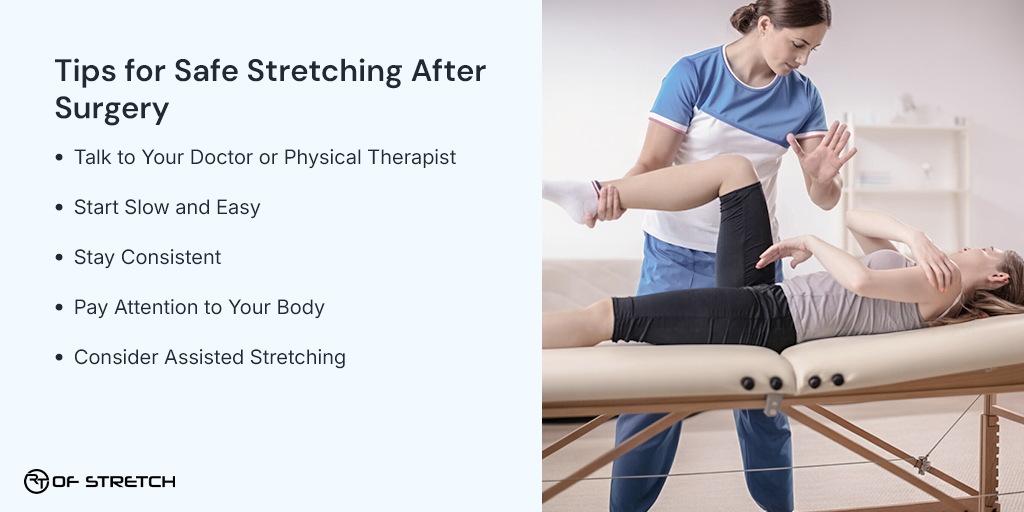
Talk to Your Doctor or Physical Therapist
Before you stretch a single muscle, get the green light. Your medical team knows what your body needs and what to avoid. They’ll guide you on what’s safe.
Start Slow and Easy
Don’t rush into long or intense stretches. Begin with short sessions, just a few minutes, and listen to your body. If something hurts, stop.
Stay Consistent
Consistency beats intensity. Stretching a little every day will help more than doing one long session every few days. Think routine, not workout.
Pay Attention to Your Body
Stretching shouldn’t feel sharp or painful. A light pulling or gentle tension is fine. But if you wince or feel pressure around your surgical site, back off.
Consider Assisted Stretching
If you’re feeling unsure or limited in your range of motion, assisted stretching may help. This involves a trained and certified stretch therapist guiding you through safe stretching exercises. It’s especially helpful early in recovery or if you have trouble moving on your own.
Final Thoughts
Healing after surgery is personal. Everyone recovers at their own pace. But one thing is true across the board: your body needs movement to heal well. Gentle, guided stretching after surgery can help you feel better, move more easily, and get back to life on your terms. Just take it slow and get the support you need along the way.
Support Your Surgical Recovery With Smart Stretching
Don’t let post-surgery stiffness hold you back. Our certified stretch specialists at RT OF STRETCH are trained to help you move safely and recover faster, with targeted sessions designed just for post-procedure needs.
Let’s support your healing, one stretch at a time. Book a session today and explore our Post-Procedure Stretching Services.
FAQs
Can I stretch right after surgery?
Not right away. Always check with your doctor first. Most stretching starts days or weeks after surgery, depending on the type.
What are safe stretches after surgery?
Gentle, slow movements that don’t cause pain. Your physical therapist or provider can give you a list.
Will stretching make my scar tissue worse?
No. It actually helps reduce excessive scar tissue buildup by keeping tissues flexible.
How long should I stretch every day?
Even 5–10 minutes daily can make a difference. Stick with what your care team recommends.