
Basketball puts constant demand on the body. Players sprint, jump, land, and change direction in seconds, which places stress on the muscles and joints. That is why Stretches for Basketball play an important role in helping players stay ready for movement, performance, and recovery.
When stretching is skipped or rushed, tightness often builds in areas like the hips, hamstrings, calves, and lower back. This can affect how a player moves on the court, from speed and jumping ability to control during quick direction changes. Stretching helps keep the body moving more freely and supports recovery after intense play.
Why Stretches for Basketball Matter
Basketball requires a mix of speed, strength, and control, and your muscles need to handle all three at once. When stretching is skipped, players often notice reduced jump height, slower acceleration, poor balance on landings, and a higher risk of muscle strain. Over time, tightness tends to build up in key areas like the hips, hamstrings, calves, ankles, and shoulders, since these muscles work nonstop during games. Keeping these areas mobile helps your body move more freely on the court, supports smoother performance, and makes recovery feel easier after intense play.
What Type of Stretch Should Basketball Players Do?
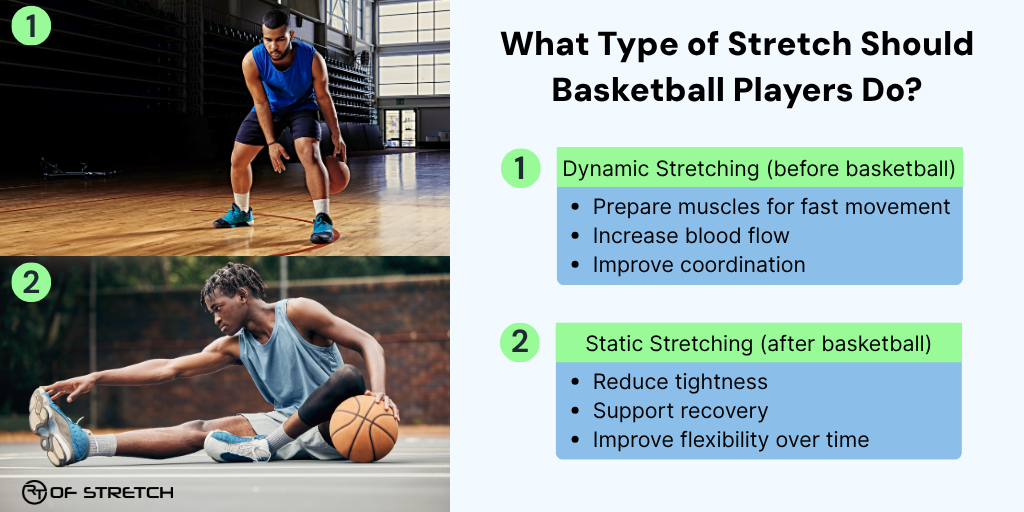
Not all stretching works the same way. Timing matters. Different types of stretching follow different movement patterns. Here are the types of stretching.
Dynamic stretching (before basketball)
This is movement-based stretching used before activity.
It helps:
- Prepare muscles for fast movement
- Increase blood flow
- Improve coordination
Think of it as getting your body ready to react.
Static stretching (after basketball)
This is slow stretching held in place.
It helps:
- Reduce tightness
- Support recovery
- Improve flexibility over time
Think of it as helping your body relax and reset.
Why both matter
Basketball involves explosive movement followed by recovery needs.
- Dynamic prepares your body for speed
- Static helps your body recover after effort
A simple rule:
- Move before you play
- Stretch after you play
Dynamic Stretches for Basketball Warm-Ups
These movements help activate the body before stepping on the court.
1. High Knees
This activates the hip flexors and core, which support quick sprints, fast breaks, and explosive first steps.
- Jog in place
- Lift knees toward chest
- Keep rhythm steady
2. Butt Kicks
This activates hamstrings, which are important for sprint speed, quick stops, and defensive movement.
- Jog lightly
- Kick heels toward glutes
- Stay relaxed
3. Walking Lunges with a Twist
This improves hip movement and rotation used during drives, defense, and directional changes.
- Step into a lunge
- Rotate your upper body gently
- Alternate legs forward
4. Leg Swings
This loosens hip joints, which are heavily used in jumping, cutting, and landing.
- Hold support for balance
- Swing leg forward and back
- Then side to side
5. Arm Circles
This prepares the shoulders for shooting, passing, and physical contact during play.
- Make controlled circles
- Move forward and backward
- Increase range gradually
Static Stretches for Basketball Recovery
These help the body recover after games or training.
1. Standing Hamstring Stretch
This helps reduce tightness from sprinting and jumping, which lowers post-game soreness.
- Keep one leg straight
- Reach toward toes
- Hold gently
2. Quad Stretch
This releases tightness in the front thigh, which is heavily used in jumping, running, and landing.
- Pull your foot toward your glutes
- Keep knees close
- Maintain balance
3. Hip Flexor Stretch
This helps reduce tight hips caused by running, sitting, and constant direction changes.
- One knee on the ground
- Other leg forward
- Push hips slightly forward
4. Calf Stretch
This supports ankle stability and helps with jumping and landing control.
- One foot back
- Heel stays down
- Lean forward gently
5. Glute Stretch
This releases hip and lower back tension from cutting, defense, and repeated jumping.
- Cross ankle over opposite knee
- Pull gently toward the chest
- Hold position
Common Mistakes Basketball Players Make
Many players stretch but still feel tight due to habits.
- Skipping warm-ups
- Holding static stretches before games
- Ignoring hips and ankles
- Rushing through movements
- Only stretching when pain appears
Consistency matters more than long sessions.
How Stretch Therapy Helps Basketball Players
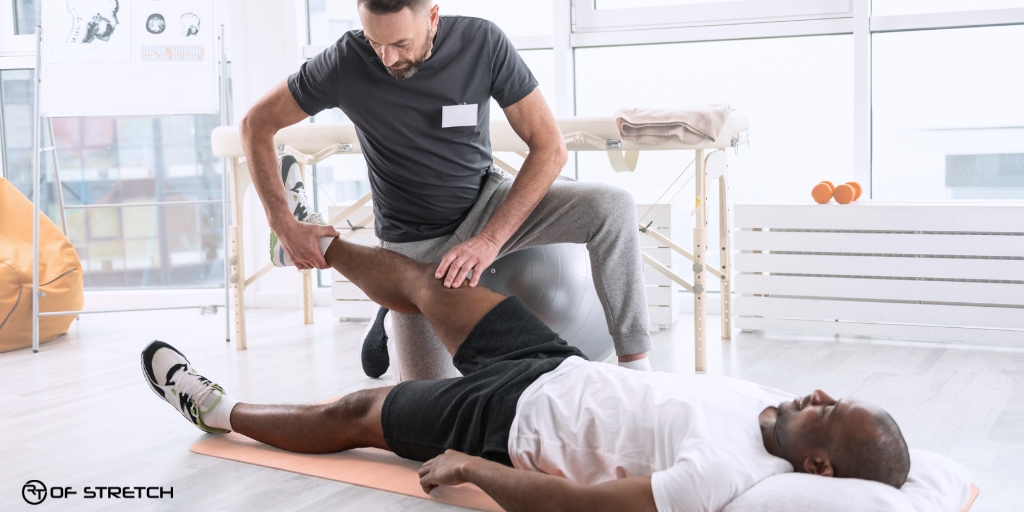
Sometimes, tightness builds up too much for solo stretching.Assisted stretch therapy can:
- Target tight areas safely
- Improve mobility
- Help muscles relax more deeply
Basketball players often feel tightness in their hips, hamstrings, and shoulders. Guided stretching helps address these areas in a controlled way. Group stretch sessions also help build consistency and better recovery habits.
Final Thought
If you play basketball regularly, your body needs care just as much as training. Stretches for Basketball help you move better, recover faster, and stay ready for every game. Consistent stretching keeps your movement smoother and your body more prepared for the demands of the court.
Improve Your Basketball Mobility and Recovery
If tight muscles, limited flexibility, or recurring soreness are affecting how you move on the court, guided stretching can help. At RT OF STRETCH, our assisted stretch sessions focus on improving mobility, flexibility, and muscle recovery so basketball players can move more freely, jump with better control, and recover faster after intense games or training.
Contact us today to schedule a session and learn more about our assisted stretch therapy and group stretch programs designed to support performance and recovery.
FAQs
What are the best stretches for basketball players?
The best stretches for basketball include dynamic movements like high knees, leg swings, and walking lunges before playing, and static stretches like hamstring, quad, hip flexor, calf, and glute stretches after games. These help improve mobility, support recovery, and reduce tightness in key muscle groups used during basketball.
How do you stretch for basketball the right way?
Stretch for basketball by using dynamic stretches before activity to warm up your muscles and static stretches after playing to help your body recover. Focus on areas that work the most in basketball, like the hips, legs, calves, and shoulders. Keeping it consistent helps improve movement and reduce stiffness over time.
What are good stretches for basketball performance and recovery?
Good stretches for basketball include leg swings, lunges with twists, quad stretches, hamstring stretches, and calf stretches. These exercises support jumping, sprinting, balance, and recovery by keeping the main muscle groups used in basketball loose and mobile.
Why are stretches important for basketball players?
Stretching is important for basketball players because the sport involves fast movement, jumping, and quick direction changes. Without proper stretching, muscles can become tight, which may lead to slower movement, reduced performance, and a higher risk of strain or injury.
When is the best time to do stretches for basketball?
The best time to stretch depends on the type of stretch. Dynamic stretching should be done before playing to prepare the body for movement, while static stretching is best done after games or training to help muscles relax, recover, and reduce soreness.