
As we get older, our bodies don’t always move the way they once did. Stiffness and aches can slow us down and make simple tasks harder than they need to be. However, the good news is that a little bit of stretching can help keep you feeling stronger and more comfortable every day.
According to the CDC’s physical activity for older adults, people 65 and older should include aerobic, muscle-strengthening, and balance activities in their weekly routine. Stretching supports all three by improving the range of motion and preparing the body for safe movement. It’s a low-impact way to stay active and reduce the risk of injury.
In this guide, you’ll learn techniques and safety tips designed for stretching for seniors. These simple moves can help you stay active, improve your balance, and enjoy your daily routine with less pain.
Why Stretching Matters for Seniors
Stretching is essential for maintaining the flexibility of your muscles and joints. As we age, muscles tend to tighten up, and joints can feel stiff. Learning the right types and techniques of stretching for seniors can loosen those muscles, improve your range of motion, and make daily tasks like walking, bending, or reaching much easier.
Good flexibility also helps prevent falls, a significant concern for many older adults. When your muscles and joints move smoothly, your balance improves. As we age, joint flexibility naturally decreases. Shoulders and hips lose about 6 degrees of movement every decade between the ages of 55 and 86 years. That’s why regular stretching is so important. It also boosts blood flow, which can help reduce aches and pains.
There’s even a mental boost. Taking a few minutes to stretch can lower stress and leave you feeling calmer. That’s a win for both your body and mind.
Tips for Safe Stretching for Seniors
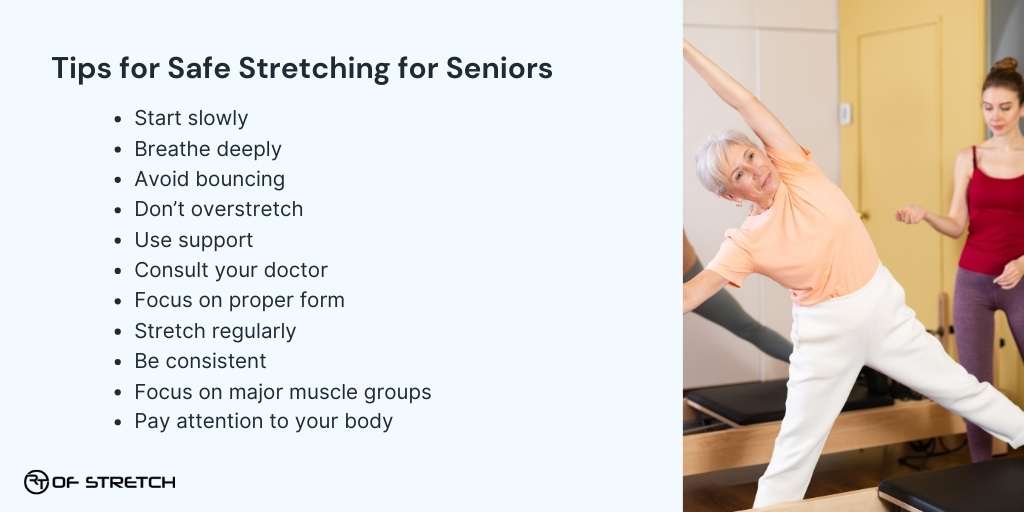
Understanding the importance of stretching for seniors can lead to improved mobility, reduced aches, and enhanced balance. Use these tips to stretch safely and stay active.
- Start slowly: Begin with gentle stretches and gradually increase your range of motion as your flexibility improves. Take your time and don’t rush.
- Breathe deeply: Inhale and exhale smoothly during each stretch. Holding your breath can reduce blood flow and increase the risk of injury.
- Avoid bouncing: Bouncing strains muscles and tendons. Hold each stretch steadily for 10 to 30 seconds, feeling a gentle pull but no sharp pain.
- Don’t overstretch: If you feel pain, ease off or stop. Stretching should be comfortable, not painful.
- Use support: If balance is tricky, use a wall, chair, or stable object for support during stretches.
- Consult your doctor: If you have health conditions, joint pain, or injuries, consult your doctor or a physical therapist before starting a new exercise routine.
- Focus on proper form: Keep good posture and alignment to maximize benefits and reduce injury risk.
- Stretch regularly: Aim to stretch several times a week, or even daily, to experience the benefits of daily stretching, such as improved flexibility and mobility.
- Be consistent: Consistency is key. Use reminders or calendars to stay on track with your routine.
- Focus on major muscle groups: Include stretches for your legs, arms, back, and neck to improve overall flexibility.
- Pay attention to your body: Listen to your body’s signals and adjust intensity or duration as needed.
Simple and Effective Stretching Techniques for Seniors
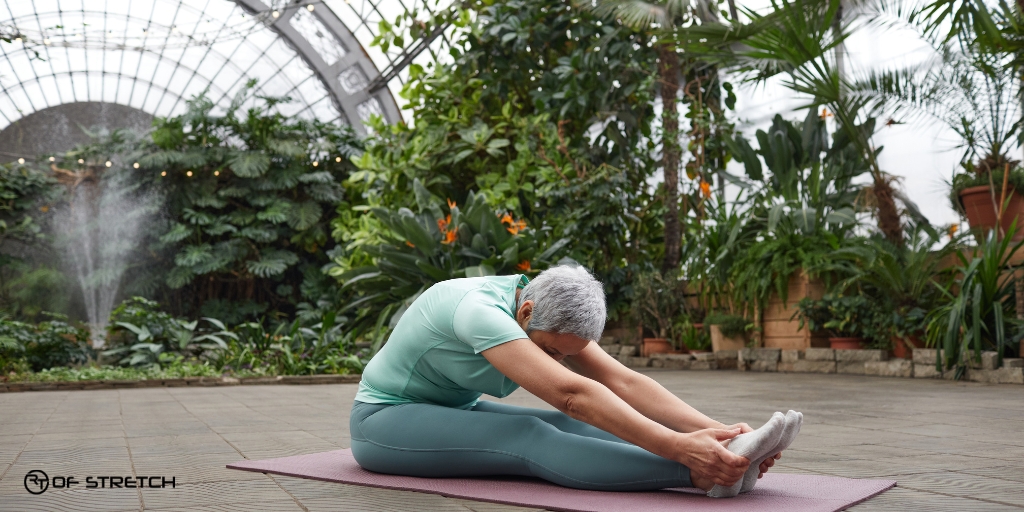
Here are some easy stretches for seniors you can try. Most of these can be done seated or standing and don’t need any special equipment.
- Neck and Shoulder Stretch: Sit or stand tall. Slowly tilt your head toward your right shoulder until you feel a gentle stretch on the left side of your neck. Hold for 20 seconds. Repeat on the other side. Then, shrug your shoulders up toward your ears and slowly roll them back and down.
- Seated Hamstring Stretch: Sit on a chair with one leg extended straight in front of you, heel on the floor. Keep your back straight and gently lean forward from your hips until you feel a stretch behind your thigh. Hold for 20-30 seconds and switch legs.
- Ankle Circles: While seated, lift one foot off the floor and slowly rotate your ankle in circles. Do 10 rotations clockwise, then 10 counterclockwise. Switch feet. This helps with ankle flexibility and can reduce fall risk.
- Chest Opener Stretch: Sit or stand with your hands clasped behind your back. Gently squeeze your shoulder blades together and lift your chest. You should feel a stretch across your chest and shoulders. Hold for 20 seconds.
- Side Stretch: Raise your right arm overhead and lean gently to the left side, keeping your body straight. Hold for 20 seconds and switch sides. This stretch loosens the sides of your torso, helping to improve overall flexibility.
- Calf Stretch Against a Wall: Stand facing a wall and place your hands on it. Step one foot back and press your heel down until you feel a stretch in your calf muscle. Keep your back leg straight and bend your front knee slightly. Hold for 20-30 seconds and switch legs.
Final Thoughts
Stretching for seniors isn’t about pushing limits; it’s about gentle, steady care for your body. These simple moves can help you stay flexible, reduce aches, and improve balance. The key is to listen to your body and keep it simple. Try adding a few stretches to your day and notice how your body feels. Staying active and flexible helps you enjoy every moment with more ease and confidence.
Help Your Body Feel Younger With Gentle Stretching for Seniors
Aging doesn’t have to mean feeling stiff or sore every day. Our senior care program at RT OF STRETCH offers assisted stretches for seniors and passive stretch techniques to gently improve flexibility, ease joint pain, and support better balance and posture, without overexertion.
Book an appointment today and take the first step toward better mobility, balance, and energy. We make it simple, safe, and effective—because you deserve to feel your best at every age.
FAQs
Are there stretches seniors should avoid?
Avoid any stretch that causes sharp pain or discomfort. Also, be cautious with high-impact or deep twisting moves unless advised by a professional.
How often should seniors stretch?
Aim for daily stretching or at least 3-4 times a week to keep muscles flexible and joints healthy.
Can stretching help with arthritis pain?
Yes, gentle stretching can reduce stiffness and improve joint mobility, easing arthritis symptoms.
When should I avoid stretching?
Avoid stretching if you have sharp pain, recent injuries, or swelling. Consult a doctor if unsure.